

Kerala Traditional Saree: History, Types and How to Choose the Right One
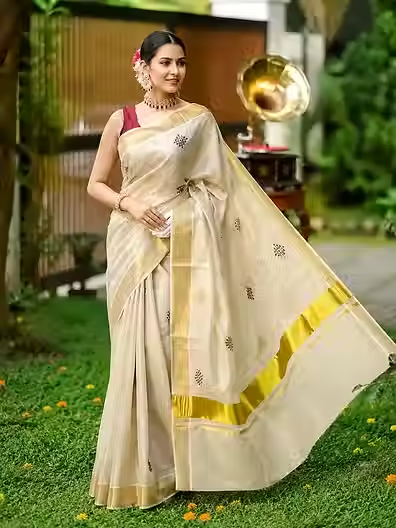
Want to know more about the Kerala traditional saree and the process of selecting the right one for yourself? In this guide, you will learn all about the history, types of weaves, fabrics used, care instructions, and ordering process.
There is something mysteriously fascinating about a saree made of cream colored material but having gold borders. It does not need any vibrant colors or fancy designs, but it grabs every pair of eyes in the room. That is the magic of the traditional saree of Kerala, which has journeyed from the homes of royalties to family functions while retaining all its elegance. Whether you are looking for an Onam saree or wedding saree or just feel like having a piece of heritage of Kerala, choosing the right one is important. We at Haradhi have worked with Kuthampully handloom weavers and served more than two lakh customers, and thus, know the requirements of buyers.
What Is a Kerala Traditional Saree and Why Is It So Loved?
In simple words, it is a saree that is hand-spun and has a cream off white color with a gold zari border named kasavu. Its simplicity in designing is deliberate and purposeful. It does not have any complicated design as its beauty lies in its simplicity and golden glow. If the saree is made in two pieces, then it is known as set saree or Mundum Neriyathum.
Here is what makes it special:
Handwoven by skilled artisans, often in Kuthampully, Kerala’s handloom village
Light, breathable cotton that suits warm weather
Kasavu borders that add shine without heaviness
Worn at Onam, Vishu, weddings and temple visits
Easy to drape and simple to style with a contrast blouse
How Old Is This Tradition?
Kerala saree has been in existence for several decades now. In the beginning, Kerala saree was worn by women from rich backgrounds to signify their high status in the society. Kerala sarees have gradually developed into beautiful outfits for festive occasions like Onam, Vishu, and marriages. Without mentioning Kuthampully, the story of Kuthampully would be incomplete. Around 500 years ago, the King of Kochi summoned some weavers from the Devanga community of Karnataka to weave luxurious outfits for his royal family members.
What Are the Main Types of Kerala Sarees?
Here is a quick guide to what you will come across:
Kasavu saree: The classic cream and gold look, and the Onam favourite.
Set mundu: A two-piece set that is light and easy to drape.
Tissue saree: Lightweight with a glossy golden sheen, great for receptions.
Soft silk saree: Richer drape and a premium feel for weddings.
Dhavani set: A traditional half-saree for young girls and festive dressing.
Cotton, Tissue or Soft Silk: Which Fabric Should I Pick?
It depends on the occasion and how much shimmer you want.
A quick comparison:
Cotton: Breathable and budget-friendly, ideal for daily wear, Onam mornings and temple visits.
Tissue: Light with a glossy sheen, perfect for receptions and festive evenings.
Soft silk: Rich drape and a dressier feel, best for weddings and grand celebrations.
Comfort: Cotton is the coolest, tissue sits in between, and silk feels the most formal.
Care: Cotton is the easiest to maintain, while silk needs gentler handling.
Which Occasions Call for This Saree?
Almost any festive moment works:
Onam Sadhya and pooja days
Weddings, engagements and receptions
Vishu and temple visits
Anniversaries and festive photoshoots
Gifts for mothers, sisters and newly married couples
For lighter days, a cotton set mundu still looks effortlessly elegant.
How Do I Choose the Right One Online?
Buying a Kerala traditional saree online feels easier when you know what to check.
Keep this list handy:
Fabric details: Look for fabric type, weaving place and length.
Border quality: A genuine kasavu border looks neat with a slightly raised finish.
Blouse piece: Confirm whether one is included before paying.
Real photos: Prefer natural-light images over heavily edited ones.
Reviews: Read genuine feedback from past buyers.
Policies: Check shipping, return and exchange terms first.
What Mistakes Should I Avoid While Ordering?
Even careful shoppers slip up sometimes.
Watch out for these:
Choosing only by price, since very low rates often signal machine-made or blended fabric
Skipping the product description
Forgetting that screen colours can differ slightly from real life
Ignoring the return policy
Ordering at the last minute before Onam or a wedding
Order early and keep a small buffer for delivery.
How Do I Style It for a Modern Look?
Tradition and trend can sit together comfortably.
Try these ideas:
Pair cream and gold with a maroon or deep green blouse
Add simple gold jhumkas or temple jewellery
Tie your hair in a bun with fresh jasmine
Choose a boat-neck blouse for a contemporary feel
Keep makeup soft so the saree stays the star
How Do I Care for My Handloom Saree?
Handloom pieces last for years with gentle care.
Wash separately in cold water with mild detergent
Never wring or scrub the zari border
Dry in the shade, as strong sunlight dulls the gold
Iron on low heat with a thin cloth over the border
Store in a muslin or cotton cloth, away from damp
Why Should I Choose Haradhi?
Haradhi brings handloom pieces from Kuthampully weavers straight to your home.
If you want an authentic Kerala traditional saree without worry, here is what you get:
Direct sourcing from skilled handloom weavers
Wide range: set mundu, Kerala sarees, soft silk, tissue, dhavani sets and more
Free shipping within India
Cash on delivery
30-day return policy
WhatsApp support, loyalty rewards and a referral programme
What Do Shoppers Usually Ask Before Buying?
Is a Kerala traditional saree only for Onam?
Not at all. While Onam and Vishu are the big moments, it also suits weddings, receptions, temple visits and even simple festive days at home. Cotton versions work for daily elegance, and silk or tissue versions suit grander events.
How long does delivery take?
It depends on your location. One Haradhi customer reported receiving a set mundu in four working days, and the shipping page lists current timelines.
Can I return a saree if the colour or fit is not right?
Yes, there is a 30-day return policy. Please read the Returns and Exchanges page for the conditions before ordering.
Does the saree come with a blouse?
Some designs include a running blouse, while others do not. Check the product page, and note that Haradhi also sells separate blouse materials.
Can I pay on delivery?
Yes, cash on delivery is available, so you pay when your order arrives.
Which colour is best for a wedding?
Maroon, deep green, gold and cream are timeless. As a guest, avoid pure white or bridal red so the bride stands out.
Ready to Find Your Perfect Saree?
A Kerala saree is not just a dress to be worn. It is a heritage that you wear, and the right choice makes every celebration special. Take your time, think about what is mentioned above, and select a reliable seller. Once you have made up your mind to buy a saree in the Kerala tradition, Haradhi is always ready to offer you an authentic Kuthampully saree with free delivery, hassle-free returns and WhatsApp support. Discover Haradhi’s collections of Kerala sarees, soft silk sarees and set mundus today.


Comments