

Kerala Handloom Saree: The Complete Guide to Authentic Weaves and Timeless Elegance
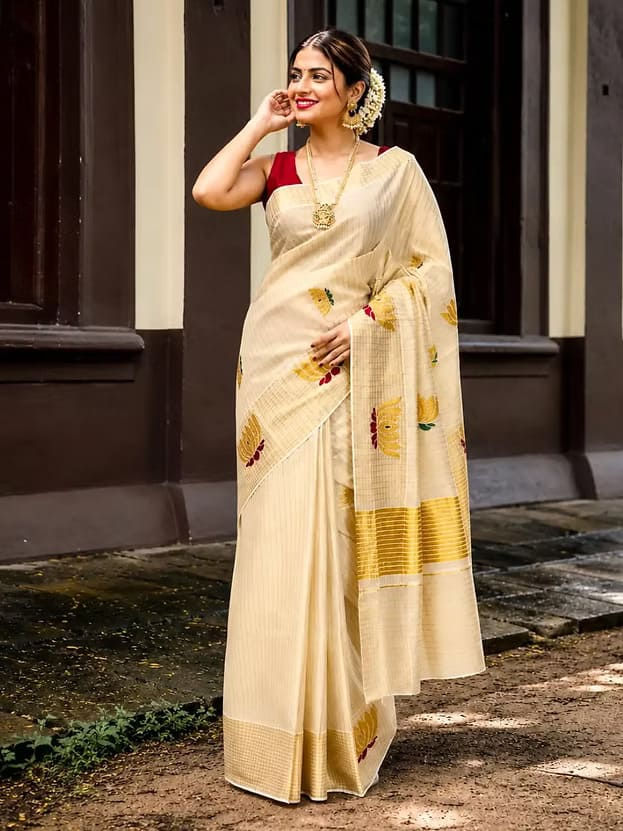
Having trouble distinguishing between an actual Kerala handloom saree and machine-made versions that are now available everywhere? There is nothing new under the sun. It is so easy now to confuse a machine-made saree with a handloom because of the many vendors advertising handloom products when they are actually not. Here is everything you should consider before making that purchase, and why Haradhi can be trusted.
What Exactly Is a Kerala Handloom Saree?
Kerala handloom saree is an Indian traditional dress made manually in a wooden loom using manual techniques that have been practiced for many years by the artisans in weaving villages such as Kuthampully and Balaramapuram. Unlike the sarees woven by power-looms and machines, every thread in a handloom saree is intentionally put in place.
Key characteristics that define an authentic handloom saree include:
Off-white or cream base fabric with a signature golden Kasavu border
Real zari (gold thread) work, not printed or synthetic imitation borders
Slight irregularities in weave, a natural sign of handmade craftsmanship
Pure cotton or silk yarns, offering breathability and comfort
Traditional motifs inspired by temples, nature, and mythology
Why Should You Choose a Kerala Handloom Saree Over Machine-Made Alternatives?
Many buyers don't realize the difference until they compare both fabrics side by side.
Choosing a genuine Kerala handloom saree comes with real advantages:
Superior durability — Handwoven fabric tends to last far longer than machine-made alternatives
Unique craftsmanship — No two handloom sarees are exactly identical
Supports local artisans — Your purchase directly sustains traditional weaving communities
Sustainable fashion choice — Handloom production has a lower environmental footprint
Cultural authenticity — A true representation of Kerala's textile heritage, not a diluted copy
How Can You Identify a Genuine Kerala Handloom Saree Online?
This is where most online shoppers struggle.
Since you can't physically touch the fabric before buying, here's what to check before purchasing a Kerala handloom saree online:
Look for weaving village mentions — Genuine sellers specify Kuthampully, Balaramapuram, or similar origins
Check for real zari borders — Textured, slightly raised gold thread, not flat printed patterns
Read the fabric description carefully — Pure cotton or silk should be explicitly mentioned
Verify customer reviews with photos — Real buyer images help confirm authenticity
Ask about sourcing — Reputable sellers are transparent about direct weaver partnerships
Compare pricing — Extremely low prices are often a red flag for machine-made substitutes
How Does Haradhi Compare to Other Handloom Sellers?
With so many platforms claiming to sell handloom sarees, it's fair to wonder who actually delivers on that promise.
Here's how Haradhi's Kerala handloom saree collection stands apart from typical marketplace sellers:
Direct weaver sourcing — Haradhi sources sarees directly from Kuthampully artisans, while many sellers depend on third-party resellers
Verified authenticity — Real zari work and pure fabric, not printed look-alikes
Transparent pricing — Regular and sale prices clearly listed, without hidden markups
30-day hassle-free returns — Far more flexible than restrictive policies elsewhere
Cash on delivery available — A convenient option not always offered by competitors
Wide product range — Sarees, set mundu, kids' wear, and men's traditional wear under one platform
What Problems Do Buyers Commonly Face With Handloom Sarees?
If you've felt unsure before buying, you're likely dealing with one of these common concerns:
Difficulty distinguishing handloom from power-loom fabric online
Uncertainty about whether the zari border is real or printed
Confusion over fair pricing versus inflated "discount" tactics
Worry about durability after a few washes
Doubt about return options if the saree doesn't match expectations
A reliable seller takes care of all these issues by providing comprehensive product details, accurate prices, and effective return policies, which is precisely why purchasing a Kerala handloom saree through the internet has become such a safe process compared to before.
How Do You Care for a Kerala Handloom Saree?
Proper care keeps your handloom saree looking beautiful for years.
Follow these simple tips:
Hand wash separately in cold water for the first few washes
Avoid harsh detergents that can damage natural fibers
Dry in shade, not direct sunlight, to preserve color
Iron on medium heat with a cloth barrier over zari borders
Store in a cotton cloth, not plastic, to allow the fabric to breathe
Why Is Demand for Kerala Handloom Sarees Growing in 2026?
There's a clear shift happening in fashion choices, with more people moving away from fast fashion toward sustainable, handcrafted clothing.
A few reasons the Kerala handloom saree is trending again:
Growing awareness around ethical and sustainable fashion practices
Increased social media visibility of traditional South Indian weaves
Steady demand during wedding, Onam, and festival seasons
Younger generations rediscovering heritage textiles as a style statement
This rising demand also brings more imitation products into the market, making it more important than ever to buy from a verified, authentic source.
Frequently Asked Questions
1. What makes a Kerala handloom saree different from a regular saree?
It's handwoven on traditional looms by skilled artisans, using pure cotton or silk yarns with authentic zari borders, unlike machine-made sarees.
2. How much does a Kerala handloom saree cost?
Prices typically range from ₹1,500 to ₹4,500 depending on fabric quality, border design, and weaving complexity.
3. Is a Kerala handloom saree suitable for daily wear?
While lighter cotton handloom sarees can be worn regularly, most are reserved for festive occasions, weddings, and cultural events due to their craftsmanship value.
4. How do I know if I'm buying a genuine handloom saree online?
Check for real zari borders, explicit weaving village mentions, verified reviews, and transparent seller sourcing information.
5. Does Haradhi offer a return policy on handloom sarees?
Yes, Haradhi provides a 30-day hassle-free return and exchange policy on all handloom sarees.
6. Is cash on delivery available for Kerala handloom saree orders?
Yes, Haradhi offers cash on delivery along with free shipping across India.
7. How long does a Kerala handloom saree typically last with proper care?
With proper washing and storage, a good quality handloom saree can last many years, often becoming a treasured heirloom piece.
Final Thoughts
An authentic handloom saree of Kerala is not only a textile but also a living heritage that has been kept alive through centuries by people who have been making it. Since there are a lot of imitation items available in the market, it becomes essential to know what to look out for.
This is where Haradhi steps in. Through direct weaving sourcing, pricing transparency, and the customer-oriented approach, Haradhi makes it easy for you to own an authentic high-quality handloom saree from Kerala. Check out the range now and see what quality craftsmanship can do.


Comments